


 Sea Beach
Digital payments are becoming an essential part of modern businesses. From eCommerce and SaaS platforms to marketplaces and fintech applications, companies increasingly need secure, scalable, and branded payment experiences.
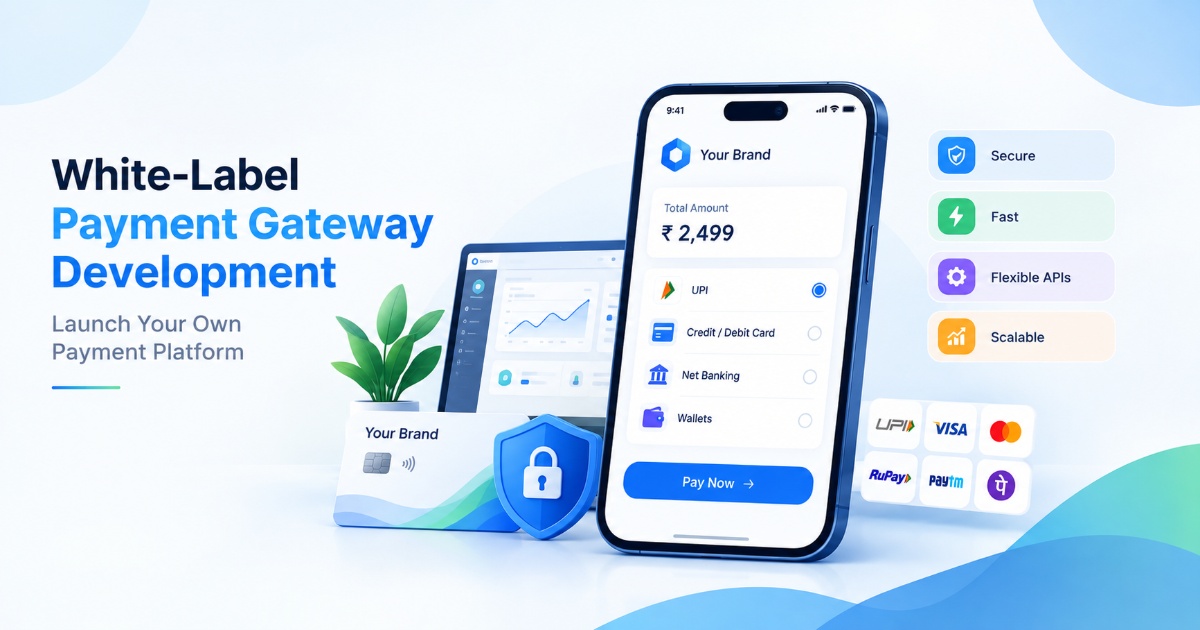
A white-label payment gateway allows businesses to launch a payment solution under their own brand while using an existing technology foundation. Instead of developing every payment component from scratch, businesses can customize the platform according to their brand, customers, merchants, and business requirements.
What Is White-Label Payment Gateway Development?
White-label payment gateway development involves creating or customizing a payment platform that businesses can operate under their own branding.
A white-label payment solution can include:
- UPI payment integration
- Debit and credit card payments
- Net banking
- Digital wallets
- Payment links
- QR payments
- Recurring payments
- Merchant management
- Transaction management
- Refunds and chargebacks
- Settlement management
- Payment APIs
- Fraud detection
- Reporting and analytics
- Admin dashboards
- Multi-currency payment support
The objective is to provide businesses with a branded payment ecosystem that can connect customers, merchants, applications, and financial workflows.
Why Businesses Are Choosing White-Label Payment Platforms
Building an entire payment ecosystem independently can require significant technology development, integrations, security implementation, testing, monitoring, and ongoing maintenance.
A white-label approach allows businesses to focus on their product, customers, brand, and growth while using an established technology foundation.
Launch Under Your Own Brand
Businesses can customize the payment experience with their own logo, colors, user interface, domain, merchant dashboard, notifications, and checkout experience.
This creates a consistent customer journey and helps businesses build their own payment identity.
Faster Product Development
Instead of developing every foundational payment component from the beginning, businesses can start with an existing technology framework and customize it around their requirements.
This can be particularly useful for startups, fintech businesses, SaaS companies, marketplaces, and enterprises looking to introduce payment functionality.
Multiple Payment Methods
A modern payment platform can support multiple payment methods based on the target market and available payment partners.
For businesses operating in India, this can include UPI, cards, net banking, wallets, QR payments, and other supported payment methods.
Merchant Management
For businesses serving multiple merchants, merchant management becomes one of the most important parts of the platform.
A merchant dashboard can provide:
- Merchant registration
- KYC workflows
- Transaction monitoring
- Settlement information
- Refund management
- Commission management
- Reports
- Payment history
- Account management
Essential Features of a White-Label Payment Gateway
A professional payment gateway should be more than a checkout page. It should provide the infrastructure required to manage the complete payment lifecycle.
Payment Processing
The payment engine manages payment requests, transaction processing, verification, payment status, refunds, and other payment workflows.
Payment Gateway APIs
APIs allow websites, mobile applications, SaaS platforms, marketplaces, CRM systems, ERP platforms, and other software to connect with payment services.
A well-designed API architecture can also support webhooks and real-time transaction notifications.
Merchant Dashboard
Merchants should have access to transaction information, settlements, refunds, payment status, reports, and other business information through a centralized dashboard.
Admin Dashboard
The platform owner requires advanced controls for merchant management, transaction monitoring, settlements, commissions, reports, permissions, and system configuration.
Security and Fraud Detection
Security should be considered from the beginning of payment platform development.
Depending on the architecture and applicable requirements, payment platforms may use encryption, tokenization, authentication, access controls, transaction monitoring, fraud detection, and security testing.
Recurring Payments
Subscription businesses can integrate recurring payment functionality for SaaS products, memberships, subscriptions, digital services, and other recurring business models.
Analytics and Reporting
Payment analytics can help businesses understand transaction activity, successful and failed payments, refunds, settlements, merchant performance, and other important metrics.
White-Label Payment Gateway vs Custom Payment Gateway
White-label and custom payment gateways can have different development approaches.
A white-label payment gateway generally starts with an existing payment technology foundation that can be branded and customized.
A custom payment gateway is designed more specifically around the business's technical and operational requirements and may involve deeper customization of workflows, integrations, dashboards, and architecture.
The appropriate approach depends on the business model, target market, payment methods, integrations, required level of customization, compliance requirements, and long-term technology strategy.
How to Launch Your Own Payment Platform
Launching a payment platform requires more than developing an app. Businesses should plan the technology, integrations, security, operations, and applicable compliance requirements together.
1. Define Your Business Model
First determine what type of payment platform you want to build.
For example:
- Fintech payment platform
- eCommerce payment solution
- SaaS payment system
- Marketplace payment platform
- Merchant payment solution
- Subscription payment platform
- Enterprise payment application
Your business model determines the payment workflows and features required.
2. Select Payment Methods
Determine which payment methods your customers and merchants need.
For an India-focused platform, this could include UPI, cards, net banking, wallets, QR payments, and other supported methods.
3. Plan the Payment Architecture
The platform architecture should connect the customer interface, payment APIs, payment processing, security systems, payment partners, settlements, reporting, and administrative systems.
The architecture should also be designed for scalability, monitoring, reliability, and future integrations.
4. Develop Merchant and Admin Dashboards
A payment platform normally requires different interfaces for customers, merchants, administrators, and internal finance or operations teams.
Each dashboard should provide the functionality relevant to its user type.
5. Integrate Payment APIs
Payment APIs can connect your platform with websites, mobile applications, payment providers, banking services, KYC systems, CRM platforms, ERP systems, accounting software, and notification services.
6. Implement Security
Payment applications handle sensitive financial information, so security needs to be part of the development lifecycle.
Depending on the business model and applicable requirements, areas to consider include:
- Encryption
- Tokenization
- Authentication
- Role-based access
- Secure APIs
- Fraud monitoring
- Transaction monitoring
- Security testing
- Data protection
- Audit logging
7. Test the Platform
Before launching, the platform should undergo extensive testing.
Important areas include:
- Functional testing
- API testing
- Security testing
- Load testing
- Payment failure testing
- Refund testing
- Settlement testing
- Dashboard testing
- Mobile compatibility
- Browser compatibility
- Performance testing
Why Choose RSCoder for Payment Gateway Development?
RSCoder provides custom payment gateway and payment application development solutions for businesses looking to build branded digital payment platforms.
The development scope can include payment gateway APIs, UPI integration, card payments, wallets, merchant dashboards, settlement management, fraud detection, recurring payments, reporting, multi-currency functionality, and custom payment workflows.
RSCoder can also integrate payment platforms with websites, mobile applications, SaaS products, CRM systems, ERP solutions, and other business software.
Build Your Own Payment Platform with RSCoder
If your business is planning to launch a white-label payment gateway, fintech application, merchant payment platform, or custom payment solution, RSCoder can help transform the concept into a scalable digital product.
Talk to RSCoder about your payment platform requirements.
🌐 www.rscoder.org
📞 +91 6390223910
📧 inforscoder@gmail.com
The Future of White-Label Payment Platforms
Payment technology is moving toward more connected and intelligent digital ecosystems.
The future of payment platforms is likely to involve combinations of:
- Payment APIs
- Real-time transaction processing
- AI-powered fraud detection
- Automated payment workflows
- Digital wallets
- Tokenization
- Merchant analytics
- Intelligent reporting
- Mobile payment applications
- Embedded payments
- AI-powered financial automation
This means businesses can increasingly treat payment infrastructure as part of a broader digital product rather than simply a checkout feature.
Final Thoughts
White-label payment gateway development provides businesses with an opportunity to create a branded payment experience while leveraging an established technology foundation.
A successful platform should bring together payment processing, APIs, multiple payment methods, merchant management, security, fraud prevention, settlements, analytics, scalability, and appropriate compliance planning.
Whether you are building a fintech platform, eCommerce payment solution, SaaS payment system, marketplace, or merchant-focused application, choosing the right technology architecture and development partner is an important part of the process.
RSCoder can help businesses build custom and white-label payment solutions designed around their specific digital payment requirements.
Discover how businesses can launch their own branded payment platform with white-label payment gateway development, APIs, UPI, merchant management, security and scalable technology.
White-Label Payment Gateway Development: How Businesses Can Launch Their Own Payment Platform