


 Sea Beach
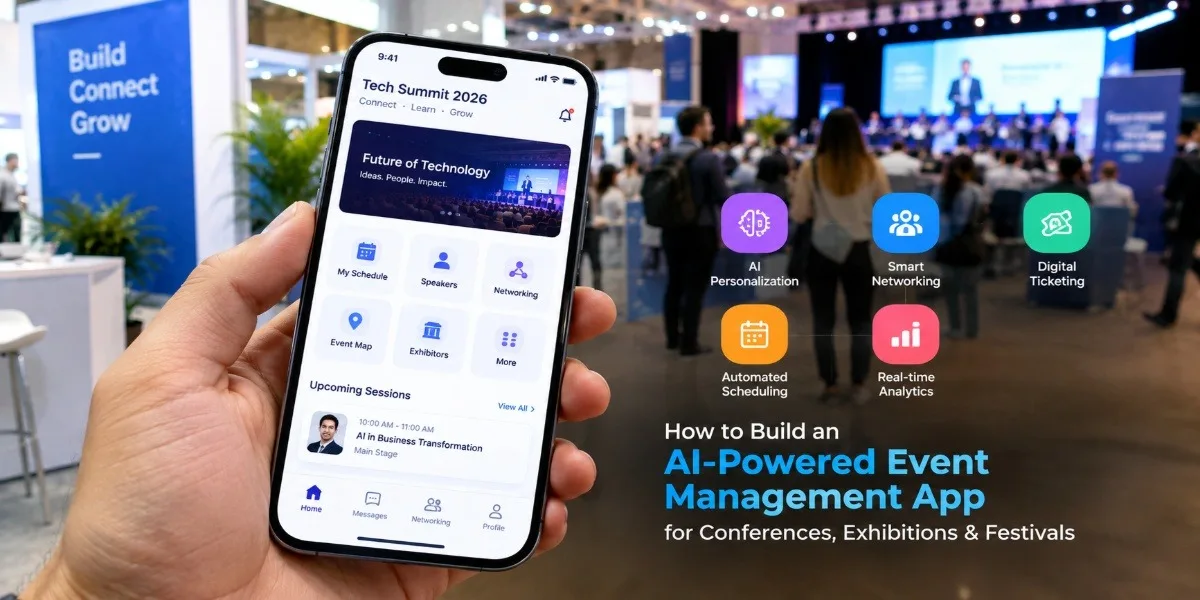
Events are becoming more intelligent, personalized, and technology-driven. Whether it is a business conference, international exhibition, trade show, music festival, corporate gathering, or hybrid event, organizers increasingly need more than a basic registration or ticketing application.
A modern AI-powered event management app can act as a digital operating system for the entire event lifecycle—from planning and ticket sales to attendee networking, venue navigation, real-time communication, analytics, and post-event engagement.
AI is already moving from experimentation into practical event operations. Cvent's 2026 research reports that 50% of meeting planners are using AI to help plan and execute events, while 84% expect AI to have a moderate-to-major impact on the meetings and events industry.
For businesses planning to launch their own event technology platform, the opportunity is not simply to build an event app, but to build an intelligent system that can understand users, automate workflows, and improve event outcomes.
Build Your AI Event Management Platform with RSCoder
If you are planning a custom event management app, RSCoder can help transform your event business idea into a scalable web and mobile platform.
RSCoder develops solutions combining AI, mobile apps, web applications, APIs, payment gateways, dashboards, automation, analytics, and cloud technology for modern businesses.
What Makes an AI Event Management App Different?
A traditional event application primarily displays information.
An AI-powered platform can understand information and take intelligent actions.
For example, instead of simply showing 50 conference sessions, the application can analyze an attendee's interests and recommend the most relevant sessions.
Instead of displaying hundreds of attendee profiles, AI can identify people who may have valuable business connections.
Instead of sending the same notification to everyone, the platform can deliver relevant updates based on attendee activity and preferences.
This is where AI event management software moves beyond conventional event technology.
Modern event platforms are increasingly using AI for personalized schedules, networking recommendations, attendee assistants, exhibitor recommendations, and event insights.
Step 1: Define the Event Business Model
Before development begins, determine exactly what the platform needs to accomplish.
An app designed for a 500-person corporate conference will have different requirements from a platform supporting a 50,000-person music festival or international exhibition.
Your business model may include:
- Conference management
- Exhibition management
- Festival management
- Corporate events
- Trade shows
- Product launches
- Networking events
- Hybrid events
- Virtual conferences
- Community events
You should also identify your primary users:
Organizers → Attendees → Speakers → Exhibitors → Sponsors → Vendors → Staff
Each user can have a separate dashboard and experience.
Step 2: Design the AI Architecture
AI should not simply be added as a chatbot.
The strongest AI event app development strategy connects artificial intelligence with the application's actual business data.
A scalable architecture can include:
Mobile App + Web Platform + Backend + AI Layer + APIs + Database + Analytics + Cloud Infrastructure
The AI layer can work with:
- Attendee profiles
- Registration data
- Session information
- Event schedules
- Networking activity
- Ticket information
- Exhibitor information
- Feedback
- Engagement data
This allows the system to generate useful recommendations rather than generic AI responses.
Step 3: Build Intelligent Attendee Profiles
Every attendee should have a dynamic digital profile.
The profile can include:
- Professional role
- Industry
- Interests
- Skills
- Business goals
- Preferred sessions
- Networking preferences
- Exhibitors viewed
- Sessions attended
- Content engagement
AI can then continuously improve recommendations based on actual interaction.
This is particularly valuable for large conferences and exhibitions where attendees can easily feel overwhelmed by hundreds of sessions, booths, and networking opportunities.
Modern event technology is moving toward this type of attendee-led personalization, where AI uses behavior and preferences to help people discover what is most relevant to them.
Step 4: Add AI Networking & Matchmaking
One of the most valuable features of an AI-powered event app can be intelligent networking.
Instead of leaving attendees to search through thousands of profiles, AI can recommend relevant connections.
For example:
“You may want to meet these three exhibitors because they match your interests in SaaS, automation, and payment technology.”
The platform can calculate matching based on:
- Industry
- Professional interests
- Business requirements
- Skills
- Location
- Event behavior
- Sessions attended
- Networking objectives
The app can then allow users to:
- Send connection requests
- Start conversations
- Schedule meetings
- Exchange digital business cards
- Join networking groups
AI matchmaking is becoming an important event technology direction because the objective is shifting from simply creating more connections to creating more relevant connections.
Step 5: Create an AI Event Assistant
An AI event assistant can become the attendee's personal digital guide.
Instead of searching through multiple screens, users can ask:
“Which marketing sessions should I attend today?”
“Where is Hall B?”
“Which exhibitors offer CRM solutions?”
“Who should I meet at this event?”
“What is happening after 5 PM?”
The assistant can answer using the event's own data.
This creates an experience closer to having a personal event concierge inside the mobile application.
Step 6: Develop Smart Ticketing & Payments
Ticketing should be more than a checkout page.
A complete event ticketing app can support:
- Multiple ticket categories
- Early-bird pricing
- VIP tickets
- Group registration
- Discount codes
- Online payments
- QR tickets
- Digital passes
- Refund management
- Invoice generation
- Automated confirmations
For large events, the platform can also connect ticketing with check-in, attendee profiles, access control, and analytics.
AI can potentially help organizers identify demand patterns and improve ticketing decisions based on historical and real-time data.
Step 7: Add Smart Venue & Event Navigation
Large exhibitions and festivals can become difficult to navigate.
An intelligent event app can provide:
- Interactive venue maps
- Hall navigation
- Booth locations
- Session room directions
- Parking information
- Food and facility locations
- Emergency information
- Real-time announcements
The app can also use attendee context to recommend nearby sessions, booths, or activities.
Modern mobile event applications are increasingly becoming the attendee's central interface for navigation, communication, networking, and personalized experiences.
Step 8: Build Real-Time Event Intelligence
The real power of AI appears when the event is actually happening.
The platform can analyze live activity such as:
- Registration numbers
- Check-ins
- Session attendance
- App engagement
- Networking activity
- Booth visits
- Ticket sales
- Feedback
- Notification engagement
Organizers can see which sessions are performing well and where attendee activity is increasing or declining.
AI can then convert raw data into useful recommendations for event teams.
Step 9: Connect the App With Business Systems
A professional event management software development project should not operate as an isolated application.
It should integrate with the tools already used by the organization.
Important integrations may include:
- CRM systems
- Email marketing platforms
- Payment gateways
- SMS services
- WhatsApp APIs
- Calendar APIs
- Video conferencing platforms
- Analytics platforms
- Accounting systems
- Access-control systems
- QR/RFID/NFC technology
API integration creates a connected ecosystem where event data can move between systems automatically.
Step 10: Add Post-Event AI Automation
The event does not end when attendees leave the venue.
A smart event platform should continue working after the event.
AI can help generate:
- Attendee engagement reports
- Session summaries
- Speaker performance insights
- Exhibitor reports
- Sponsor analytics
- Feedback analysis
- Lead follow-up suggestions
- Personalized content recommendations
- Post-event communication
This creates an ongoing relationship with attendees instead of treating the event as a one-day activity.
Technology Stack for an AI Event App
Depending on the project requirements, an AI event management app development company may use technologies such as:
| Component | Possible Technologies |
|---|---|
| Mobile App | Flutter, React Native, Native iOS, Android |
| Frontend | React, Next.js, Vue |
| Backend | Node.js, Python, Laravel, .NET |
| Database | PostgreSQL, MySQL, MongoDB |
| AI | OpenAI APIs, LLMs, RAG, AI Agents |
| Cloud | AWS, Azure, Google Cloud |
| Payments | Razorpay, Stripe, PayPal |
| Communication | SMS, Email, Push, WhatsApp APIs |
| Analytics | Custom dashboards, BI & event analytics |
| Security | Encryption, authentication, role-based access |
The final technology stack should be selected according to the event size, expected users, integrations, AI requirements, security needs, and scalability goals.
How Much Does It Cost to Build an AI Event Management App?
The development cost depends heavily on the application's scope.
A basic event application with registration and ticketing will require a very different investment from an enterprise platform containing:
- AI matchmaking
- AI assistant
- Predictive analytics
- Multi-event management
- Exhibitor portals
- Sponsor management
- Real-time communication
- Payment systems
- CRM integrations
- Advanced dashboards
- Hybrid-event functionality
Therefore, the right approach is to define the MVP first, validate the core business model, and then expand into advanced AI capabilities.
Why Choose RSCoder for AI Event App Development?
Building an event application requires more than mobile development.
It requires expertise across UI/UX, backend development, APIs, cloud infrastructure, AI integration, payment systems, analytics, automation, and scalable architecture.
RSCoder can help businesses develop customized event technology for:
- Conferences
- Exhibitions
- Festivals
- Corporate events
- Trade shows
- Networking events
- Hybrid events
- Virtual events
The objective is to create an event platform that is not only functional but also intelligent, scalable, engaging, and ready for future AI capabilities.
The Future of AI-Powered Event Management
The next generation of event applications will increasingly behave like intelligent event operating systems.
AI agents may assist organizers with planning, content, communication, scheduling, attendee engagement, and post-event workflows. Meanwhile, attendees will receive increasingly personalized experiences based on their goals and real-time behavior.
The direction is already visible: major event technology platforms are introducing AI capabilities across planning, attendee recommendations, networking, content, and event operations.
The winning event platforms will not simply provide more features. They will use technology to make the event more relevant, easier to navigate, more connected, and more measurable.
Build Your AI-Powered Event Management App with RSCoder
If you have an idea for a conference app, exhibition management platform, festival app, event ticketing solution, AI networking application, or complete event management software, RSCoder can help you turn it into a scalable digital product.
From AI integration and mobile app development to dashboards, APIs, payments, automation, analytics, and cloud deployment, build your complete event technology platform with RSCoder.
RSCoder — AI, Web & Mobile App Development
🌐 www.rscoder.org
📞 +91 6390223910
✉️ inforscoder@gmail.com
Build smarter events. Connect better audiences. Turn event data into business growth.
Discover how to build an AI-powered event management app with smart networking, personalized experiences, digital ticketing, automation, analytics, and real-time event management.
How to Build an AI-Powered Event Management App for Conferences, Exhibitions & Festivals