


 Sea Beach
Why Cargo Logistics Businesses Need a Powerful Digital Platform
The logistics industry depends on speed, visibility, coordination and reliable delivery. From freight forwarders and cargo transport companies to third-party logistics providers, fleet operators and supply chain businesses, every organisation needs efficient ways to manage shipments, communicate with customers and control daily operations.
However, many logistics businesses still depend on phone calls, spreadsheets, manual documentation and disconnected software. These processes can make it difficult to track consignments, manage vehicle assignments, respond to customer enquiries and monitor operational performance as the business grows.
This is where cargo logistics website and mobile app development becomes a strategic investment.
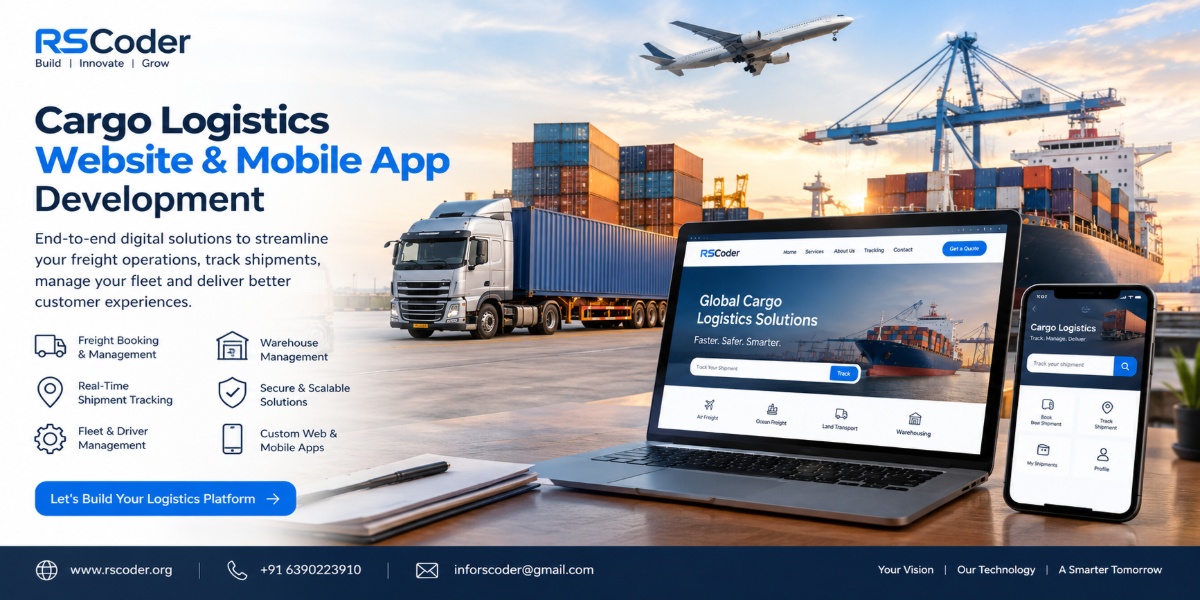
A professionally developed logistics website can help businesses attract customers, generate freight enquiries, present transportation services and offer online shipment tracking. A connected mobile application can support drivers, dispatch teams, customers and operations managers throughout the transportation process.
At RSCoder, businesses can explore digital solutions for website development, mobile app development and custom software designed around their operational requirements. The objective is to connect customer acquisition with day-to-day logistics management through a more integrated digital experience.
Ready to digitise your cargo business? Explore RSCoder's Cargo Logistics Mobile App Development solution and discuss a website-and-app strategy tailored to your business.
What Is Cargo Logistics Website and Mobile App Development?
Cargo logistics website and mobile app development involves building digital platforms that help transportation businesses manage freight services, customer bookings, shipment visibility, fleet coordination and business administration.
Rather than treating the website and mobile application as separate products, businesses can connect them to a shared backend system. This allows authorised users to access relevant information from different interfaces while keeping shipment records and operational updates synchronised.
A complete cargo logistics solution may include:
-
A business website showcasing cargo, freight and transportation services.
-
A customer portal for shipment booking, quotations and consignment tracking.
-
A mobile app for customers to manage bookings and receive delivery updates.
-
A driver application for trip assignments, navigation and proof of delivery.
-
An administrative dashboard for shipments, users, vehicles and reports.
-
API integrations for GPS tracking, notifications, payments and existing business systems.
The final scope depends on whether the business handles domestic transportation, international freight, courier operations, full truckload shipments, partial truckload services or multiple logistics activities.
Essential Features of a Cargo Logistics Website
Your logistics website should do more than display company information. It should help potential customers understand your services, request quotations and take the next step without unnecessary friction.
1. Professional Logistics Website Design
A clean, responsive website establishes credibility and helps customers understand your transportation capabilities. It should clearly communicate cargo categories, service coverage, delivery options, industry expertise and contact information.
Dedicated service pages can target different audiences, such as manufacturers, wholesalers, eCommerce companies, exporters and freight forwarding businesses.
2. Online Freight Booking and Quote Requests
Allow customers to submit pickup and delivery locations, cargo weight, dimensions, shipment type and preferred delivery dates through a structured booking form.
For businesses with variable freight rates, the platform can support quotation requests or a configurable rate calculator. Automated pricing should only be offered when the required route, carrier, weight and pricing data are available.
3. Shipment Tracking Portal
A shipment tracking page lets customers enter a consignment number or authorised tracking reference to view available shipment milestones.
Depending on the integrations, tracking can display booking confirmation, pickup, dispatch, transit, arrival at a hub and delivery confirmation. Live vehicle location and estimated arrival times require suitable GPS or carrier data.
4. Customer Login and Account Management
Registered customers can access their shipment history, booking details, invoices, quotations and relevant documents through a secure portal.
For business clients managing multiple shipments, this feature can make recurring logistics activities easier to organise.
5. Search Engine Optimisation
A technically sound website can target relevant commercial searches such as cargo logistics services, freight transportation, cargo tracking solutions and logistics website development.
Service-specific landing pages, useful industry content, clear navigation, descriptive page titles, fast loading and mobile usability can support organic search visibility.
SEO should be treated as an ongoing process, not a guarantee of first-page rankings.
Must-Have Features in a Cargo Logistics Mobile App
A mobile application can extend logistics operations beyond the office, helping customers, drivers and managers access relevant information while they work.
1. Customer Cargo Booking App
Customers can submit shipment requirements, request freight quotations, confirm bookings where supported and view their consignment history. Push notifications can communicate important booking and delivery milestones.
2. GPS-Based Fleet Tracking
When connected to compatible GPS devices or driver location services, the platform can show vehicle locations and movement on a map. Access controls and location permissions should be designed carefully, especially when tracking employees or vehicles outside active assignments.
3. Driver and Delivery Management
A dedicated driver app can provide trip details, pickup instructions, delivery addresses and assigned shipment information.
Drivers may also upload delivery photographs, collect recipient signatures, scan barcodes and record delivery exceptions. These capabilities create a more structured digital record of each consignment.
4. Digital Documents and Proof of Delivery
Paper-based processes can be supplemented with electronic consignment records, delivery receipts, photographs and authorised signatures.
Document generation and regulatory workflows should be designed around the business's specific requirements and applicable rules.
5. Notifications and Customer Support
Automated email, SMS, push or messaging notifications can keep customers informed about important shipment events.
A support module can also help customers report delays, request changes or raise delivery issues without relying entirely on repeated phone calls.
Take Your Logistics Business Beyond Manual Operations
RSCoder helps businesses explore website, mobile app and custom software development for connected digital workflows. If you want to create a cargo booking platform, a shipment tracking portal or a complete logistics management application, start with the business processes you need to improve.
Visit RSCoder to discuss your project requirements and plan a digital platform aligned with your operational goals.
Website vs Mobile App vs Complete Logistics Platform
Choosing the right development approach depends on your business model, users and growth plans.
| Solution | Best suited for | Main capabilities |
|---|---|---|
| Cargo logistics website | Customer acquisition and service discovery | Service pages, quote forms, contact enquiries and tracking access |
| Logistics web application | Office teams and business customers | Booking management, reporting, shipment records and customer portals |
| Cargo logistics mobile app | Customers, drivers and field teams | Booking, notifications, trip assignments and delivery updates |
| Integrated logistics platform | Growing transport and freight businesses | Shared data across website, mobile apps, operations and administration |
A website may be sufficient for a business beginning its digital journey. A larger operation may benefit from a website, customer app, driver app and central management dashboard working together.
How Custom Logistics Software Improves Business Operations
Centralised Shipment Management
A connected platform can bring booking records, shipment status, customer details and delivery documentation into a single operational workflow. This reduces reliance on scattered records and makes information easier to retrieve.
Better Customer Experience
Customers value clear booking processes, accessible tracking information and timely communication. A self-service portal can answer common questions and make shipment information easier to access.
More Organised Fleet Operations
Fleet managers can coordinate vehicle assignments, driver availability, trip schedules and maintenance records through suitable management modules. GPS integrations can add visibility into active vehicle movements.
Improved Reporting and Decision-Making
Operational dashboards can help management analyse shipment volumes, delivery performance, freight revenue, vehicle utilisation and outstanding payments.
Reliable reporting depends on accurate source data and clearly defined business metrics.
Easier Business Expansion
Modular software can allow businesses to add new services, locations, customer groups, integrations and operational features as requirements change. A scalable architecture also helps prepare for higher transaction volumes.
AI, Automation and API Integrations in Modern Logistics
The next stage of logistics digitisation is not simply moving paper forms online. It is connecting data and automating suitable workflows.
Depending on business needs, a cargo logistics platform can incorporate:
-
AI-assisted demand forecasting: Analyse historical shipment data to help estimate future demand.
-
Route optimisation: Evaluate delivery locations, distance, capacity and available traffic data to suggest efficient routes.
-
Automated shipment alerts: Trigger notifications when defined tracking events occur.
-
Document data extraction: Use OCR or AI tools to extract information from supported freight documents, with verification for important fields.
-
GPS and mapping APIs: Connect vehicle location, route information and mapping services.
-
Payment and invoicing integrations: Support suitable online payments, billing records and reconciliation workflows.
-
ERP and accounting integrations: Synchronise relevant customer, shipment, inventory and financial information.
Automation should be introduced where it solves a measurable problem. For example, automating shipment notifications may be a better first step than investing in a complex AI system before the underlying operational data is reliable.
How to Choose the Right Logistics Website and App Development Company
Selecting a development partner is an important decision because logistics software often becomes part of everyday business operations.
Before starting a project, consider these factors:
Industry workflow understanding: Your development partner should understand freight booking, dispatch, tracking, documentation and delivery workflows relevant to your business.
Customisation: The solution should reflect your operating model instead of forcing every process into an unsuitable generic template.
Integration capability: Confirm how GPS providers, carrier APIs, payment services, accounting software and existing systems will connect.
Security and access control: Customer records, pricing, shipment details and employee information require appropriate authentication, permissions, secure data handling and backups.
Performance and scalability: The system should be designed for expected traffic, shipment volumes, mobile connectivity conditions and future expansion.
Testing and ongoing support: Discuss quality assurance, deployment, monitoring, maintenance and how future changes will be handled.
RSCoder offers a starting point for businesses exploring cargo logistics mobile app development and related website and software requirements. Define your core workflows and essential features before finalising the project scope.
Cargo Logistics Website and App Development Process
A structured development process helps control scope and reduce avoidable rework.
-
Requirement discovery: Identify users, shipment workflows, business challenges and the project's objectives.
-
Planning and UI/UX design: Map customer journeys, operational dashboards and mobile interfaces before development.
-
Website and application development: Build the required frontend, backend, database and administrative functionality.
-
Integration and testing: Validate tracking data, notifications, permissions, booking workflows and third-party connections.
-
Deployment and improvement: Launch the platform, monitor performance, collect user feedback and introduce improvements based on real operational needs.
A phased rollout can be useful: begin with the website, booking enquiries and core shipment records, then add customer tracking, driver applications and advanced automation as priorities become clear.
Frequently Asked Questions
1. What is cargo logistics website development?
Cargo logistics website development involves creating a digital platform for transportation services, freight enquiries, shipment tracking, customer communication and online booking workflows.
2. What features should a cargo logistics mobile app include?
Common features include cargo booking, shipment tracking, push notifications, customer accounts, driver assignments, GPS integration, digital proof of delivery and administrative reporting. The final feature set depends on the operating model.
3. Can a logistics website and mobile app use the same backend?
Yes. A shared backend can synchronise authorised shipment records, customer accounts, booking information and operational updates across the website, mobile applications and admin dashboard.
4. Can I build a custom cargo booking and tracking platform?
Yes. A custom platform can be designed around your freight services, shipment lifecycle, user roles, pricing rules and required integrations.
5. Is a mobile app necessary for every logistics company?
No. A responsive website with booking forms and tracking access may be sufficient for some businesses. Companies with field teams, frequent deliveries or complex driver workflows may benefit from dedicated mobile applications.
6. Can AI be integrated into logistics management software?
Yes. Depending on data availability and business requirements, AI can assist with demand forecasting, document processing, exception detection and route planning. Results should be tested against real operational conditions.
7. How do I start a cargo logistics website and app project with RSCoder?
Begin by identifying your business type, target users, essential features and existing software integrations. Then discuss your requirements through RSCoder.org to explore an appropriate development approach.
Conclusion: Build a Connected Digital Future for Your Cargo Business
Modern cargo logistics requires more than transportation capacity. Businesses also need clear communication, dependable shipment information, efficient coordination and digital tools that can grow alongside their operations.
A well-planned cargo logistics website can strengthen your online presence and generate qualified business enquiries. A connected mobile app can improve access to shipment information, support drivers and simplify customer communication. When both are integrated with suitable logistics software, they can help create a more consistent operational experience.
The right solution begins with your actual business needs—not with unnecessary features or technology for its own sake.
Ready to build your cargo logistics website or mobile app?
Partner with RSCoder to explore website development, mobile app development and custom digital solutions for your logistics business.
Visit: https://rscoder.org/
Explore the cargo logistics project: https://rscoder.org/project/mobile-app-development/cargo-logistics-mobile-app
Email: inforscoder@gmail.com
Call: +91 6390223910
RSCoder — Build a smarter digital foundation for your cargo and logistics business.
Build a smarter logistics business with cargo logistics website and mobile app development by RSCoder. Streamline freight booking, real-time shipment tracking, fleet management, driver coordination and logistics automation with custom digital solutions designed to improve efficiency, customer experience and business growth.
Cargo Logistics Website & App Development